Beginner vs Expert Strands Strategies: What Changes?
Whether you're just discovering NYT Strands or chasing a perfect no-hint solve, understanding the Strands beginner vs expert divide is the fastest way to sharpen your game. This article breaks down exactly how beginners and experts think differently — from first move to final word — and maps out a clear skill progression roadmap so you know what to work on next.
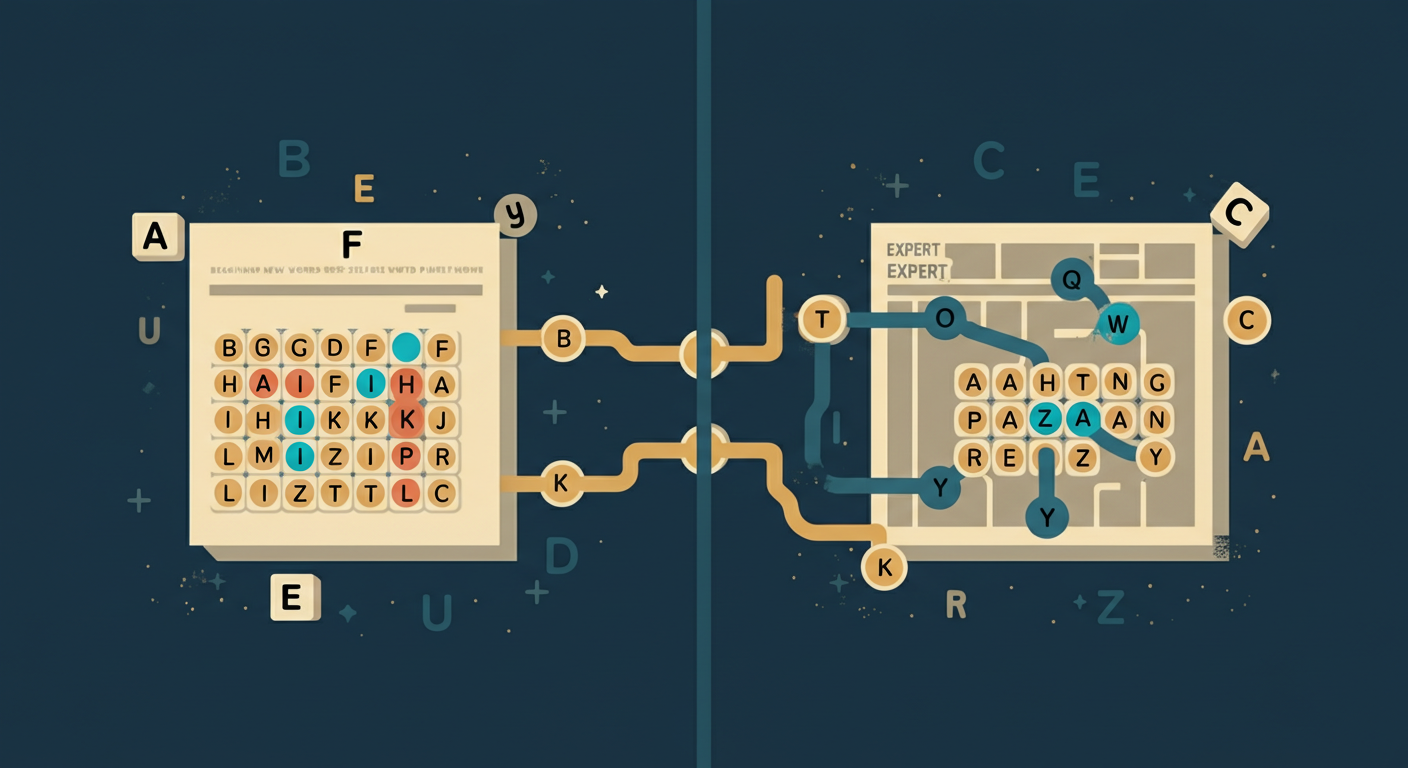
The Gap Between Beginner and Expert Play
If you’ve ever watched someone breeze through an NYT Strands puzzle in minutes while you’re still hunting for your third word, you’ve witnessed the beginner-to-expert gap firsthand. The difference isn’t raw intelligence — it’s strategy. Expert players have developed a set of mental habits and frameworks that make the grid feel less like a maze and more like a map. Understanding those habits is the first step to closing the gap.
This guide puts the Strands beginner vs expert contrast under a microscope, walks through the mental models that separate casual solvers from seasoned ones, and gives you a concrete roadmap for leveling up your NYT Strands skill levels.
How Beginners Approach Strands
Most players start in the same place: staring at the grid and scanning randomly, hoping a word jumps out. That’s a perfectly natural starting point, but it has real limitations.
Here’s what beginner play typically looks like:
- Random grid scanning. Eyes move across the board without a system, picking out any recognizable letter cluster.
- Ignoring the theme title. The theme clue at the top of the puzzle is treated as decoration rather than a solving tool.
- Reactive word-finding. Words are confirmed as they appear, with no overarching plan connecting them to the theme.
- Heavy hint reliance. When stuck, the hint button gets pressed early and often — sometimes before a genuine attempt has been made.
- No spangram awareness. Many beginners don’t prioritize finding the spangram, or don’t fully understand its role in anchoring the puzzle.
None of this is wrong — it’s just the starting point. The good news is that each of these habits has a direct expert counterpart.
How Experts Approach Strands
Expert Strands strategy looks almost nothing like the beginner approach. The biggest shift is moving from reactive to proactive — from finding words to hunting for them with purpose.
- Theme-first thinking. Before touching the grid, experts spend 10–20 seconds sitting with the theme title. They ask: What category of things does this theme describe? What specific words might fit? The theme becomes a lens that filters every letter cluster they see.
- Spangram hunting as the first move. Experts know the spangram spans the entire grid and defines the theme’s boundaries. Finding it early gives them a structural skeleton to build around.
- Systematic scanning. Rather than random eye movement, experts scan in deliberate patterns — often starting from the edges or corners where the spangram is likely to begin or end.
- Minimal hint use. Advanced Strands tips almost universally include this one: resist hints. Experts treat a no-hint solve as the real goal, using hints only as a last resort.
- Pattern recognition. After dozens of puzzles, experts recognize recurring theme structures (e.g., compound words, proper nouns, category members) and apply that knowledge immediately.
Side-by-Side Comparison: Beginner vs Expert Habits
Here’s a direct breakdown of how the two skill levels differ across the key dimensions of play.
First Move
Beginner: Starts scanning the grid immediately, looking for any recognizable word.
Expert: Reads the theme title carefully, brainstorms likely answers, then opens the grid.
Theme Usage
Beginner: Treats the theme as a vague hint, rarely consulting it during the solve.
Expert: Uses the theme as a constant filter — every candidate word is tested against it before being confirmed.
Spangram Strategy
Beginner: Finds the spangram by accident, often late in the solve.
Expert: Actively hunts the spangram first, using it to map the grid’s structure.
Scanning Method
Beginner: Random, reactive eye movement across the grid.
Expert: Systematic, directional scanning — edges first, then interior clusters.
Hint Reliance
Beginner: Uses hints after 1–2 minutes of struggle, sometimes sooner.
Expert: Commits to at least 5–10 minutes of unaided solving; hints are a last resort.
Word Confirmation
Beginner: Confirms any word that looks valid, regardless of theme fit.
Expert: Only confirms words that clearly connect to the theme — avoids locking in a wrong path.
Time Spent
Beginner: Either solves quickly with many hints or spends a long time stuck.
Expert: Spends more time upfront on theme analysis, then solves the grid faster overall.
Pattern Recognition
Beginner: Each puzzle feels brand new.
Expert: Recognizes familiar theme structures and applies past puzzle knowledge immediately.
Mental Models Experts Use
Beyond individual habits, expert players operate with a few powerful mental frameworks that beginners haven’t yet internalized.
Theme as a Filter
Experts don’t just know the theme — they actively use it to reject bad candidates. If the theme is “Things in a Kitchen” and they spot the word STEAM, they ask: Is this a kitchen thing, or is it part of a longer word like STEAMROLLER? The theme filters out noise before it wastes time.
Spangram as the Skeleton
The spangram isn’t just a bonus word — it’s the structural backbone of the puzzle. Experts treat finding it as step one because it physically divides the grid and reveals which letter regions belong to which theme answers. Once the skeleton is in place, the remaining words are much easier to locate.
Elimination Scanning
As theme words are confirmed and their letters are highlighted, experts mentally (or visually) eliminate those letters from consideration. They’re not re-scanning the whole grid — they’re scanning only the remaining letters, which shrinks the problem with every correct answer.
How Long Does It Take to Level Up?
Strands improvement doesn’t happen overnight, but it happens faster than most beginners expect — especially with intentional practice.
- Beginner (0–2 weeks): You’re learning the rules, discovering the spangram mechanic, and starting to notice the theme’s role. Hint use is high, and that’s fine.
- Intermediate (2–6 weeks): You’re reading the theme first consistently, finding the spangram more often, and using hints less. Solves feel less random.
- Expert (2–3+ months of consistent play): Theme-first thinking is automatic. You hunt the spangram as a reflex. No-hint solves happen regularly. You recognize theme structures from past puzzles.
The key word is consistent. Playing daily — even for just one puzzle — compounds faster than occasional marathon sessions.
Roadmap for Beginners to Level Up
Here are the most impactful steps you can take right now to accelerate your NYT Strands skill levels:
- Always read the theme title first. Before you look at the grid, spend 15–20 seconds thinking about what the theme means and what words it might include.
- Try to find the spangram in your first 3 minutes. Look for long paths that cross the full grid. Even if you don’t find it, the attempt trains your eye.
- Avoid hints for the first 5 minutes. Set a personal rule: no hints until you’ve genuinely tried. This discomfort is where growth happens.
- Review solved puzzles. After finishing, look at how the theme connected all the words. Understanding the logic retroactively builds pattern recognition for future puzzles.
- Track your hint count. Keep a simple log of how many hints you used each day. Watching that number drop over weeks is one of the most motivating forms of Strands improvement.
- Play every day. Consistency beats intensity. One puzzle a day for two months will transform your game more than seven puzzles on a Sunday.
You’re Closer to Expert Than You Think
The gap between beginner and expert in NYT Strands isn’t a talent gap — it’s a habits gap. Every advanced Strands tip in this guide is a learnable behavior, not an innate skill. The Strands beginner vs expert difference comes down to a handful of deliberate choices made at the start of each solve: read the theme, hunt the spangram, scan systematically, resist the hints.
Start applying one new habit per week. Within a month, you’ll be solving puzzles you once found impossible — and you’ll understand exactly why.