Strands Game vs Wordle vs Connections: Which NYT Puzzle Is Best?
The New York Times has quietly built one of the best puzzle ecosystems on the internet — but with Wordle, Connections, and Strands all vying for your daily brain workout, which one deserves the top spot? We put all three head-to-head across difficulty, skill, and replay value to help you decide. Whether you're a seasoned word nerd or a casual puzzler, this Strands game vs Wordle vs Connections breakdown has you covered.
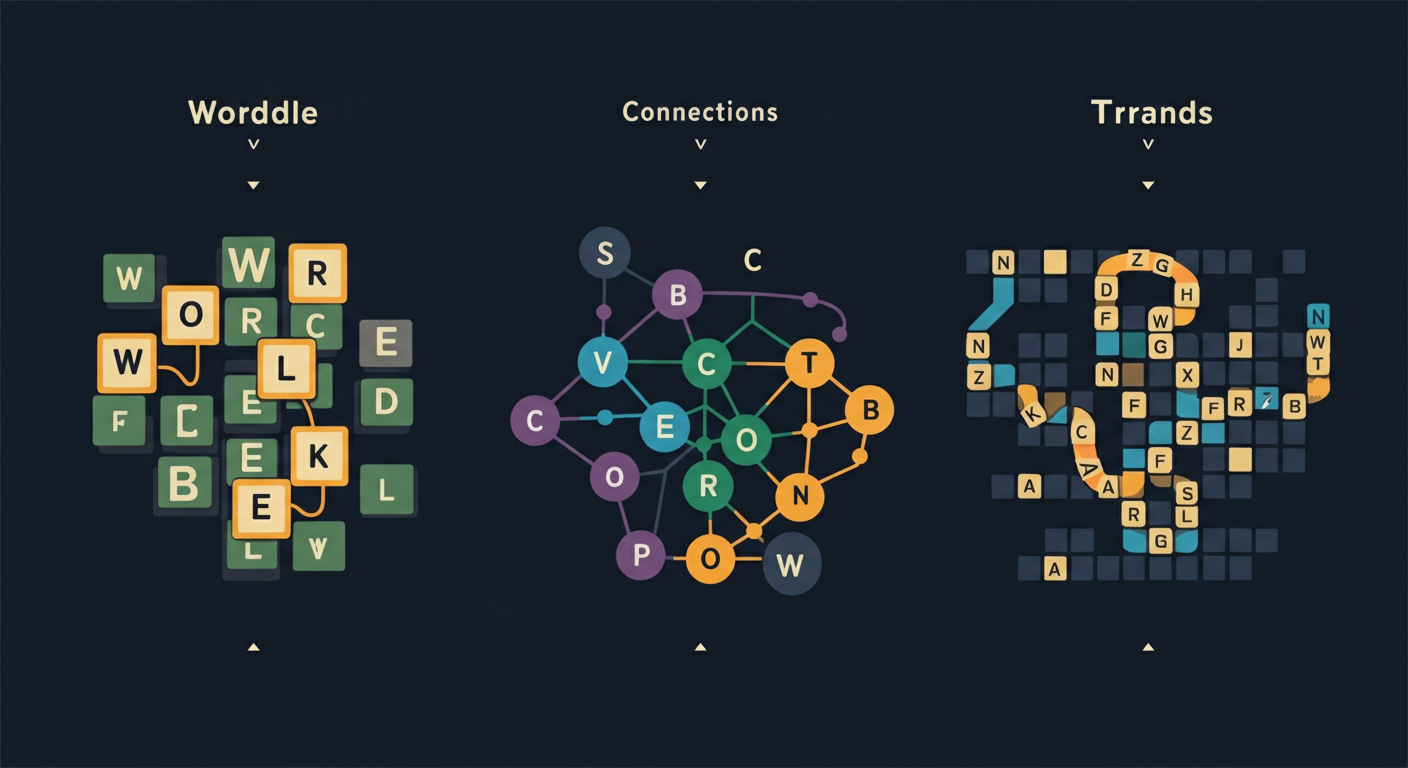
Every morning, millions of people open the New York Times Games app and face a familiar dilemma: which puzzle do I play first? The NYT has transformed its games section into a daily ritual for puzzle lovers worldwide, and three titles sit at the heart of that habit — Wordle, Connections, and Strands. Each one is free, daily, and deceptively simple on the surface. But beneath that simplicity lies a very different experience.
If you’ve ever wondered how these three games stack up against each other — or which one is actually worth your precious morning minutes — you’re in the right place. This Strands game vs Wordle vs Connections comparison breaks down everything you need to know, from difficulty and time commitment to the kind of brain it rewards most.
A Quick Overview of Each Game
Wordle
Wordle is the game that started it all. The premise is elegantly simple: guess a secret five-letter word in six attempts or fewer. After each guess, tiles change color — green means the letter is correct and in the right spot, yellow means the letter is in the word but in the wrong spot, and gray means the letter isn’t in the word at all. It’s a logic puzzle wrapped in a vocabulary test, and it rarely takes more than five minutes to complete.
Connections
Connections asks you to sort 16 words into four groups of four, with each group sharing a hidden theme. The catch? The categories range from straightforward to fiendishly tricky, and many words are deliberate red herrings designed to mislead you. Groups are color-coded by difficulty — yellow (easiest) through purple (hardest) — and you only get four mistakes before the game ends. It’s part word association, part lateral thinking, and entirely addictive.
Strands
Strands is the newest addition to the NYT puzzle family, and it brings a fresh twist to the word-search format. A grid of letters hides a set of theme words that you must find by connecting adjacent letters in any direction. Every puzzle also contains a spangram — a special word or phrase that spans the entire grid and encapsulates the day’s theme. Strands rewards patience and creative thinking, and it has a satisfying “aha” quality that the other two games rarely match.
Head-to-Head Comparison
Difficulty
Wordle sits comfortably in the middle of the difficulty spectrum. Most players solve it in three to five guesses, and even on a bad day, the color-coded feedback keeps you on track. Connections is noticeably harder — the purple category in particular can feel almost unfair, relying on obscure pop culture references or wordplay that requires a very specific frame of mind. Strands lands somewhere between the two: the theme words are usually findable with patience, but the spangram can stump even experienced players for several minutes.
Verdict: Connections is the hardest, Wordle is the most approachable, and Strands sits in the middle.
Time to Play
Wordle is the speed champion. A typical session runs two to five minutes, making it perfect for a coffee break or a commute. Connections usually takes five to ten minutes, depending on how quickly the categories click. Strands is the most time-intensive of the three — expect anywhere from five to fifteen minutes, especially when the spangram proves elusive.
Verdict: Wordle wins for speed; Strands demands the most time.
Skill Required
Wordle leans heavily on vocabulary and systematic elimination — knowing common letter patterns and high-frequency starting words gives you a real edge. Connections rewards lateral thinking, cultural knowledge, and the ability to spot non-obvious connections between seemingly unrelated words. Strands blends spatial reasoning with thematic intuition; you need to visualize paths through the grid while keeping the day’s theme in mind.
Verdict: Each game rewards a different skill set. Wordle favors word knowledge, Connections favors creative thinking, and Strands favors pattern recognition.
Replay Value
All three games reset daily, which is the foundation of their addictive quality. Wordle’s single-puzzle format keeps things tight but can feel repetitive over time. Connections offers more variety thanks to its four-category structure and the endless combinations of themes the NYT team can devise. Strands, being the newest, still feels fresh — and its grid-based format allows for more visual and thematic creativity than the other two.
Verdict: Connections and Strands edge out Wordle for long-term variety.
Who It Suits Best
Wordle is ideal for casual players, beginners, and anyone who wants a quick, satisfying mental warm-up. Connections is perfect for trivia lovers, pop culture enthusiasts, and people who enjoy the “I can’t believe I missed that” moment. Strands appeals to players who like a longer, more immersive puzzle experience and enjoy the visual challenge of a word grid.
Verdict: Wordle for beginners, Connections for trivia buffs, Strands for the patient and creative.
Comparison Summary
Here’s a quick snapshot of how all three games compare across every dimension:
- Wordle — Difficulty: Medium | Time: 2–5 min | Skill: Vocabulary & logic | Replay Value: Good | Best for: Beginners and casual players
- Connections — Difficulty: Hard | Time: 5–10 min | Skill: Lateral thinking & cultural knowledge | Replay Value: Excellent | Best for: Trivia lovers and lateral thinkers
- Strands — Difficulty: Medium–Hard | Time: 5–15 min | Skill: Pattern recognition & spatial reasoning | Replay Value: Excellent | Best for: Patient, creative puzzlers
Conclusion & Recommendation
So, in the great Strands game vs Wordle vs Connections debate, which NYT puzzle reigns supreme? The honest answer is: it depends on what you’re looking for. If you want a fast, reliable daily ritual that sharpens your vocabulary, Wordle is still the gold standard and the perfect entry point for new players. If you crave a tougher mental workout and love the thrill of cracking a clever theme, Connections is unmatched in its ability to surprise and delight — and occasionally infuriate.
But if we had to crown an overall winner for sheer originality and long-term satisfaction, Strands makes a compelling case. It’s the most immersive of the three, it rewards persistence, and the spangram mechanic gives every puzzle a memorable centerpiece. Our recommendation: play all three. They complement each other beautifully, and together they make for one of the best free puzzle experiences available anywhere on the internet. Your morning routine will thank you.